
Permanent climate Action.
Measurable results.

Join a global effort to permanently eliminate harmful refrigerant emissions.

Why refrigerant gases are a problem

When released into the atmosphere, refrigerant gases can significantly harm both the climate and the ozone layer.
Legacy refrigerants such as CFCs and HCFCs are ozone-depleting substances (ODS) that break down Earth’s
protective ozone layer while also acting as potent greenhouse gases that contribute to global warming. Even
relatively small leaks can have an outsized environmental impact.

In 1987, the Montreal Protocol banned the production of these legacy gases, but left billions of tons unaddressed and without funding for safe disposal. As a result, these refrigerants are often reused in aging, leaky equipment, stored in deteriorating cylinders, or intentionally vented into the atmosphere, continuing to threaten both the climate and the ozone layer.

How Tradewater helps

We are focused on eliminating emissions from some of the world’s most potent non-CO₂ superpollutants by finding, collecting, and permanently destroying harmful refrigerant gases before they can be released into the atmosphere. Working alongside local partners and stakeholders around the world, we help prevent ozone depletion and reduce atmospheric warming while transforming measurable climate action into trusted, high-impact carbon credits.

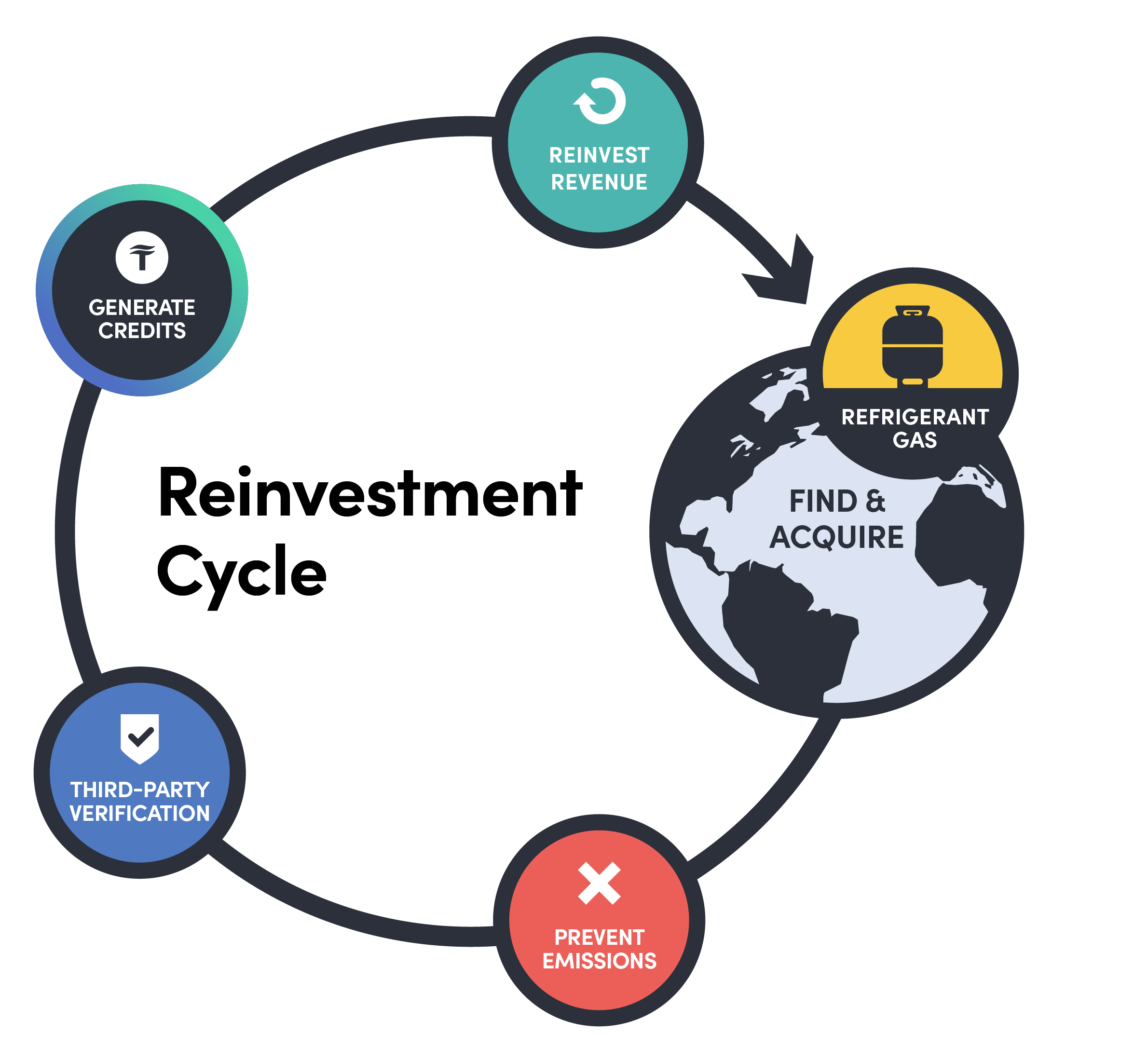
Our business model is built on a self-sustaining cycle of climate impact: creating economic value through the destruction of harmful refrigerants and reinvesting the proceeds into new recovery and destruction projects globally. This approach allows us to continually expand our reach, prevent future emissions, and accelerate near-term climate benefits at scale.
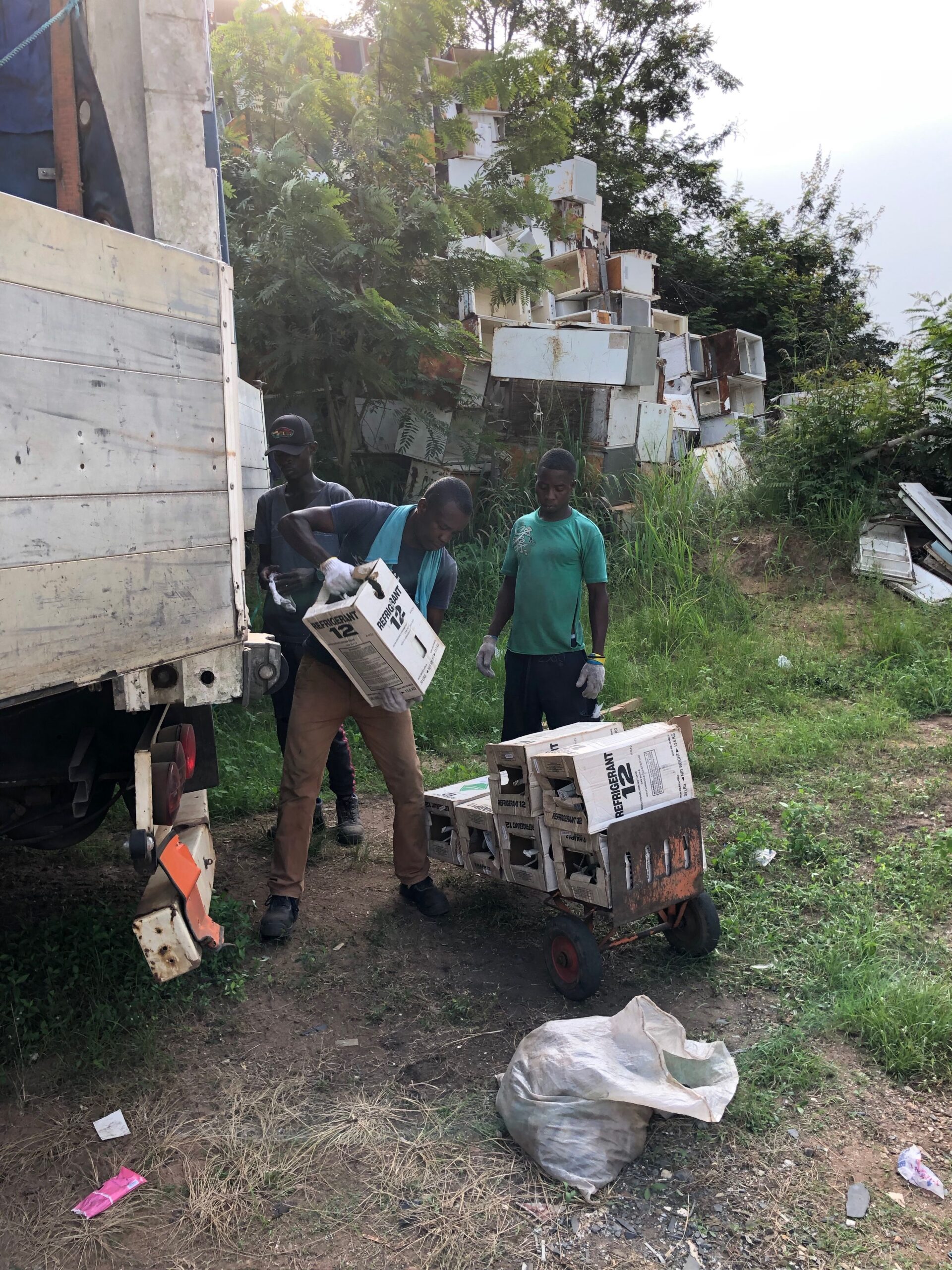
We acquire legacy gases

Our process makes refrigerant recovery and collection simple:

Tradewater advantages

FAQs

Why is it important to address legacy refrigerants?

Addressing fluorinated gases is one of the fastest and most impactful steps we can take to slow climate change. Approximately billions of tons of these gases remain at risk of release, and if they escape, they will supercharge global warming and damage the ozone layer. Their potency makes even small leaks devastating: a 12oz can of old refrigerant could have up to three tons of CO₂ equivalent inside of it. Refrigerants are scarce and costly – but their impact is universal. Locating and permanently destroying these gases is our most powerful defense against the worst of climate change and our surest path to a healthy planet for generations to come.

Eliminating refrigerants deliver permanent climate solutions by removing superpollutants that otherwise would accelerate warming for decades. It also prevents further ozone depletion, protecting human health and ecosystems. Communities benefit when old, harmful gases are cleared, reducing environmental and safety hazards. By generating highly rated, high-integrity, low-risk carbon credits, this work also creates a funding stream to expand efforts and scale impact worldwide. 

Greenhouse gas emissions destroyed by Tradewater are irreversible. We work globally to identify legacy gases in storage by building relationships with local stakeholders, conducting investigations, and purchasing recovered or unused refrigerants. Once acquired, we transport them under strict compliance protocols to licensed destruction facilities. There, gases are destroyed using rotary kiln incineration process at extremely high temperatures, achieving 99.99% destruction efficiency and leaving only harmless byproducts. This process ensures that once destroyed, these gases are gone forever, with third-party verification confirming every step.  

Tradewater recovers and collects unused or used refrigerants. We acquire CFC-11, CFC-12, CFC-13, CFC-113, CFC-114, CFC-115, CFC-500, and CFC-502. Some HCFC and HFC gases, but certain limitations apply.